Staci Bishop
Showing posts with label Books. Show all posts

Monday, August 18, 2014

[REVIEW] Motherwit (Logan & Clark)

Motherwit: An Alabama Midwife's Story
By: Onnie Lee Logan & Katherine Clark
Preview Here
Note: Book has multiple covers.
This book comes up quite a bit on recommended reading lists for birth books. It's the story of Onnie Lee Logan, an Alabama midwife, born in 1910.

This book follows her childhood, training, and life as a midwife all the way up until the 1980s. Through storytelling in her own dialect, she details not only the changes to midwifery during those years but the changes occurring in South Alabama as it relates to culture and discrimination. Ms. Logan worked among the poorest of the poor, both black and white. It was very interesting and saddening to see how these people were treated by medical professionals. Namely, they basically refused to treat them at all. Her story also gives the chronological decline of midwifery in the state of Alabama all the way thorough the outlaw of it, which is still in effect today.

Parts of this book infuriated me, as I knew it would. I think it is absolutely absurd the unfairness of not allowing midwives to practice. In addition, the history of Alabama in regards to race pretty much disgusts me. For the record, I'm allowed to say that because I was born and raised there. In that essence, it was a hard read.

One uplifting feature of this book was Onnie Lee Logan's unswerving faithfulness to God. More times than I can count, she credits God with her skills, abilities, and intuition. She also is extremely passionate about birth and babies, even stating that she would happily miss meals to deliver a baby. Like most passionate birth workers, she truly appreciates the honor and awe that surrounds the birth of a new life.

For a "granny midwife" delivering in poor conditions with patients who received little-to-no prenatal care, she sure had some amazing outcomes. I wish the book would have gone into a bit more detail about specific techniques used to achieve such results. However, this book was more about the story of her life versus her midwifery skills.

If you are selecting this book, just understand that you are getting a memoir of her life. This book is not specific to her years practicing as a midwife. Overall, it was a good read with good historical references.

Thursday, July 17, 2014

[REVIEW] Monique and the Mango Rains (Kris Holloway)

Monique and the Mango Rains
By: Kris Holloway
Preview Here
I was encouraged to read this book prior to going to Uganda. However, the timing didn't quite work out so I'm reading it 2 weeks after my return.

The story details the Peace Corp assignment of Kris Holloway starting in 1989 when she is assigned to a small village in Mali, West Africa. It is there that she works alongside Monique, a young midwife. Kris learns first hand the cultural, financial, and physical hardships that the people, particularly the women, face in Nampossela. She works tirelessly alongside Monique who serves the mothers and children of her village and neighboring villages. In addition, she has her own family responsibilities to take care of despite the lack of support from her husband.

Parts of the book were difficult to read as the oppression of women is strong. Overall, I really enjoyed learning more about African culture. It was also enlightening to see how things slowly but surely change and grow over time. Then again, there are some things that never change. The storyline flows easily and I had a hard time putting this book down. With only 208 pages, it's a quick read too.

As a doula, I appreciated the midwifery details but this was not the main focus of the book. The heart of the book was these two women, who come from very different backgrounds, and their developing friendship that ultimately tests the limits of miles and time. This book will make you laugh and cry as you see the struggles they face to bring health and healing to the village women and, ultimately, to themselves.

It's definitely a must read for someone doing humanitarian work in Africa or for a person who loves and appreciates the determination of women and the bond that ties us together.  I can see why it was recommended for me.

*Affiliate link included.

Friday, May 31, 2013

REVIEW: Baby Catcher (Peggy Vincent)


Baby Catcher: Chronicles of a Modern Midwife
By: Peggy Vincent

This book is based on the memoirs of California midwife, Peggy Vincent, and I simply could not put it down. It was an amazing story! 

She chronicles her life and experiences through the birth stories of women she worked with over the years spanning from 1962-1992. It was very interesting to see her transformation after her very first birth experience during nursing school at Duke University. It changed her perspective about labor and was a constant theme throughout the rest of her journey into midwifery and beyond.

I enjoyed how each birth continued to to shape her solo homebirth practice and some chapters left me on the edge of my seat. I was anxious to hear how they would end and even more interested to see what life lesson she would take away from that labor and how she would apply it to future midwifery clients. Many doctors she worked with believed that "all births are complicated until proven otherwise." Her philosophy for supporting women was the exact opposite and was proven over and over though out her years of practice. 

Peggy Vincent amazes me with the amount of details and dialogue she remembers from the 30 years which spanned in this book. She often talks about her meticulous notes and patient charts but I feel this book was beautifully written from her memories and first hand accounts. It's not fiction but it easily reads and flows in that manner, which explains how I managed to read it in just over 24 hours. 

I would highly recommend this book even if you aren't a birth professional. Her story is just that good! It's been added to my lending library if you would like to borrow it. 

Tuesday, April 9, 2013

Herb Fairies: Kid's Book Club Opens TODAY for a limited time!


The Herb Fairies Book Club is now open for a limited time! 

I am so excited to go through this program with my daughter and be able to share my love for natural health and healing with her. In fact, I'm just as eager to learn some new things as well.

This herbal learning system for kids includes 13 chapter books (one for each month). The book schedule also coordinates to when herbs are typically available for gathering. How cool is that?! Kids will learn how to identify the plants as well as how to harvest and use them, all through storytelling. They will be able to create their own Magic Keeper's Journal. Plus, recipe cards are also available for everything in the books. The book club also offers coloring pages and online access to a community forum where you can share your experience or ask questions. You also receive Herbal Roots Zine with additional stories, songs, information, recipes, remedies, games, crafts, calendar and much more! This is so much more than just a book club but a true hands on learning experience.
This program is great for kids of any age and for both girls and boys and an amazing way to help them explore the world around them.

The eBooks are available for Kindle, iPod, iPad, iPhone, tablets, smartphones, or printable PDFs. You will also receive mp3 files which are great for younger book club members because they can listen to the books.

The best part is that the program comes with a 30-day money back guarantee if your kids don't love it.

I'm so excited about the many ways this program can be used. I plan to do it on the weekends with my daughter but this could also be incorporated into your homeschool curriculum. Grandparents could even work through the series with their grandkids. What a special memory that would be!

Order today (click and scroll to the bottom) and you will be able to download the first book immediately to get started. Hurry! This opportunity will only be open until Saturday, April 13th and then will close until Spring 2014.

*Update 1: The herbs covered in the books have just been announced. They include Chickweed, violet, lemon balm, plantain, chamomile, calendula, marshmallow, burdock, elder, pine, rose, cinnamon and finally, dandelion.

*Update 2: They just added an additional bonus eBook: Herbal Remedies for Children (93 pages - $37 value)!

*Update 3: A payment plan option is now available!

*Update 4: When I signed up, I also got an additional bonus eBook: Wild Foods Ninja - 40 Recipes Using 8 Amazing Herbs.

Click here to check it out.

affiliate link included

Monday, April 8, 2013

Awesome Pregnancy, Birth & Baby eBook Sale!


This week only, you can get 5 awesome eBooks for less than $8. I think my readers would be particularly interested in this set because they are all related to pregnancy, birth, and baby's first year. If you were to purchase these eBooks separately  the set would cost about $40. Head on over to Bundle of the Week to purchase the entire set for only $7.40. Here are the titles that are included:

Healthy Pregnancy Super Foods by Kate Tietje
In Healthy Pregnancy Super Foods, Kate simplifies pregnancy nutrition with just two rules: 1) Don’t eat junk food and 2) Eat super foods. This ebook includes details about the super foods you should be eating (and a basic list of what you should avoid), what pregnant women’s nutritional needs are, and offers more than 30 super food recipes.


Fearless Birth by Kristen Burgess
Fear of giving birth is a very real thing, but through the Fearless Birth workbook and bonus tools, Kristen helps you understand the source of your fears, create positive images of birth, let go of fear and approach labor and birth with confidence and peace of mind.


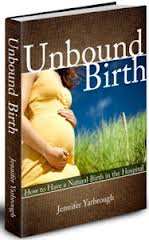
Unbound Birth by Jennifer Yarbrough
Unbound Birth: How to Have a Natural Birth in the Hospital is an inspiring collection of natural hospital birth stories. With determination, information, preparation, and support, Jennifer offers women hope for the beauty of a natural birth within a hospital setting.


The Minimalist Mom’s Guide to Baby’s First Year by Rachel Jonat Parenting is a demanding job, and the first year with a new baby iz exciting, ever so tiring and filled to the brim with baby toys, gadgets and gizmos. In The Minimalist Mom’s Guide to the Baby’s First Year, Rachel shares her own journey into motherhood and the lessons she learned about avoiding the clutter trap of too much baby stuff, slowing down to enjoy the early months with your new baby, saving money, creating a peaceful home and finding more time in your day for things like sleep!


Breast to Bib by Kate TietjeIf you’ve ever wondered how to get a baby started with real food, this is your go-to guide. In Breast to Bib, Kate offers help with breastfeeding and discusses low milk supply and homemade formula options as well as how and when to introduce solids and tips for handling picky toddlers. Plus you’ll find 27 healthy, family-friendly recipes to get you started!


When you purchase the set, you will have instant access to all 5 titles. What an awesome set of books for only $7.40. Click here to learn more. 


affiliate link included

Saturday, December 22, 2012

New Lending Library Books!


I love books, bookstores, and the like! I have a local store that buys and sells used books. I stop in from time to time to see if they have any books on pregnancy and birth. I'm pretty picky about what books I recommend for my clients but today I found NINE new books for my lending library. I was very pleased to find more books in the Sears Parenting Collection and also to find a full spectrum pregnancy and birth book that is naturally minded. I actually bought 2 of those as I plan to give one as a gift.

You can see my full lending library list here.

If you see a title that interests you, please do not hesitate to ask. I'm happy to let you borrow it anytime. Best of all, no late fees. Keep it as long as you need. Simply email me or call me and just let me know which books you need. I've even been known to deliver. :)

Happy reading!

Thursday, October 18, 2012

REVIEW: The Doula Book (Klaus, Kennell)

The Doula Book: How a Trained Labor Companion Can Help You Have a Shorter, Easier, and Healthier Birth 
By: Marshall H. Klaus, M.D.; John H. Kennell, M.D.; and Phyllis H. Klaus, C.S.W., M.F.T.

I think this is a fantastic read for parents. I was expecting this book to me more like The Birth Partner but it seems it was written more for parents than it is for doulas. As a birth professional, I appreciated the information given as it makes a case for having a doula present during labor and delivery. However, it didn't necessarily teach me anything new. With that being said, there was some helpful information found in the appendix of the book, which does pertain specifically to doulas and appears to be written to our perpective. 

The authors site several studies and show how doulas can have a positive impact on a woman's pregnancy, birth experience, post partum period and breastfeeding relationship. They give several scenarios of how a birth doula will benefit the family and serves as a compliment to the father. Having a doula present 
  • reduces the need for cesarean section, 
  • shortens the length of labor, 
  • decreases the pain medication required,
  • enhances bonding and breast-feeding. 

As I was reading the text, I found some information to be a bit outdated as the book was first published in 2003. However, a little research led me to find that a 3rd edition has just been released this year, which contains more content and updated pictures. If you are considering this book, I would highly recommend seeking the latest edition. You will be able to identify it by the new cover. 

Saturday, August 18, 2012

REVIEW: Get Me Out (Epstein)

Get Me Out: A History of Childbirth from the Garden of Eden to the Sperm Bank
By: Randi Hutter Epstein - Preview It Here

There were two things that drew me to this book. For one, I find the history of childbirth in America very interesting. I'm fascinated with how advances were discovered, why masses of women made the choices they did, and to watch how we have come full circle and see that homebirth is on the rise again. The second part was simply the fact that the author's last name is the same as the producer of The Business of Being Born. I've yet to find any evidence that they are related but it was a point of interest for me nonetheless.

This book addresses the original birth plan (homebirth) and goes on to discuss the changes in maternity care such as forceps, hospital birth, twilight sleep, fertility drugs, C-sections, ultrasound, and artificial insemination. I'm not typically good with random historical facts but I found the bit about how forceps totally intriguing. They were created by The Chamberlens, a family of man-midwives, and it ultimately became a very effective marketing tool. They had the highest rates of getting babies out and keeping mothers alive. In fact, their instrument was a highly kept secret for 200 years. They were carried in a large, heavy, wooden box and were only used after everyone else had left the room and a sheet was draped over the mother so as to prevent even the woman from having a peek at the gadget.

I had a very difficult time reading through the advances of Dr. Marion Sims. While he made the most progress in dealing with fistulas (a side effect of extreme and prolonged pushing), he did it at the cost of operating on slave women and bore them no dignity or privacy in the process.

It's interesting to note how the opinions of women changed over the years. In fact, doctors were not favored at all and many Lying-In (maternity) Hospitals were transferring Childbed Fever from patient to patient until the germ theory was discovered and hand washing and general hygiene became the standard. When rumors of "twilight sleep" hit the U.S., women demanded pain-free childbirth. What they didn't realize was that the delivery was anything but pain free. Basically, the drugs caused them to forget. In essence, it's like it never even happened. Ironically enough, most American physicians were not on board with giving this drug cocktail but women fought back until they got what they wanted.

I once read (in another source) that it takes 20 years for proven research to become practice. This was certainly evident in this text. For example, it was absolutely true in the case of Childbed Fever as doctors refused to believe that they were responsible for making the women sick. X-rays of the female pelvis began in 1930s. In 1956 a study showed that they could cause cancer but they were still routinely used in pregnancy until the 70s. In the 1950s natural childbirth started making a comeback but didn't become a full-fledged movement until the 70s. This 20-year phenomenon was again evident with the drug DES (estrogen therapy). It was used to sustain a pregnancy but 20 years later they determined that it had effects in the female offspring causing cancer or sterility. It took another 20 years before it was finally taken off the market. Seems ludicrous, right?! Yet, even now we are facing the same question with ultrasound. Wonder how long we will continue down this path until they stop using it so frequently?

The last two chapters of Get Me Out deal with technological advances for freezing sperm, eggs, and embryos. Again, I was fascinated. I was reminded of how perfect yet complex the body is and that creating and sustaining a pregnancy is more of a miracle than we often realize. The ability to create life almost instantaneously and at the time of our choosing will certainly have an affect on our society. Time will tell just how much.

I rather enjoyed this story and the author writes in a way that is factual yet comical. I did indeed laugh out loud a few times. Most of the "techniques" she writes about seemed perfectly logistical at the time yet they are quite shocking and laughable in the 21st century. Still, I think it's always important to know exactly how we have arrived at our current state of affairs. We've made huge advances yet it seems we still have a ways to go.

Saturday, July 21, 2012

Book Lending Library

Included with all services is access to the nYn audio and book collection. 

Please contact us if you would like to borrow any of these books or CDs. You can keep them as long as you need. Check back often as our library is being continually updated. 

BABY CARE
  • The No-Cry Sleep Solution (Elizabeth Pantley)
  • The Baby Book (Sears)
  • The Fussy Baby Book (Sears)
  • 25 Things Every New Mother Should Know (Sears)
  • The Premature Baby Book (Sears)
BIRTH
  • Baby Catcher: Chronicles of a Modern Midwife (Peggy Vincent) - nYn Review
  • The Birth Book: Everything You Need to Know to Have a Safe and Satisfying Birth (William & Martha Sears) - nYn Review
  • Natural Childbirth the Bradley Way (Susan McCutcheon)
  • The Thinking Woman's Gide to a Better Birth (Henci Goer) - nYn Review
  • Hypnobabies Tracks
    • What is Hypnobabies Hypnosis for Childbirth?
    • "Relax Me" Hypnosis Session
    • Entering Hypnosis with a Special Word Cue
    • Joyful Pregnancy Affirmations
    • Baby, Stay IN!
    • Come Out, Baby!
    • Birthing Day Affirmations
  • HypnoBirthing: The Mongan Method (Marie Mongan)
  • Birthing From Within (Pam England & Rob Horowitz)
BREASTFEEDING
  • The Womanly Art of Breastfeeding (La Leche League International)
  • The Nursing Mother's Companion (Kathleen Huggins)
  • Breastfeeding: A Parent's Guide (Amy Spangler)
  • The Breastfeeding Book (Sears)
CESAREAN SECTION
  • The Essential C-Section Guide (Connolly and Sullivan)
CONCEPTION
  • Taking Charge of Your Fertility: The Definite Guide to Natural Birth Control and Pregnancy Achievement (Toni Weschler)
  • How to Choose the Sex of Your Baby (Shettles & Rorvick)
LABOR SUPPORT
  • The Birth Partner: Everything You Need to Know to Help a Woman Through Childbirth (Penny Simkin) - nYn Review
NATURAL HEALTH
  • The Vintage Remedies Guide to Real Food (Jessie Hawkins)
  • The Handbook of Vintage Remedies (Jessie Hawkins)
PARENTING
  • Bright From the Start (Jill Stamm)
PREGNANCY
  • The Pregnancy Book (Sears)
  • Conception, Pregnancy & Birth (Dr. Miriam Stoppard)
  • Pregnancy, Childbirth and the Newborn (Simkin, Whalley, Keppler)
  • Pregnancy and Birth: Your Questions Answered (Reynolds, Lees, McCartan)
  • Our Bodies, Ourselves: Pregnancy and Birth (Boston Women's Health Book Collective)
VACCINES
  • The Vaccine Book (Robert W. Sears)

Don't forget to check out more nYn book reviews.

Sunday, July 15, 2012

REVIEW: Pushed (Jennifer Block)


I've been wanting to read this book for a while and it did not disappoint. The subtitle says it all, "The Painful Truth About Childbirth and Modern Maternity Care."

This book is jam packed with statistics and data. I thought it would be a difficult read but the author structures the material in such a way that it was actually a very easy read. The author does a nice job of weaving her personal accounts into to the facts, which only further supports the numbers. Block must have done countless hours of research to pull off a book like this. The stats alone are appalling but the personal stories leave the reader pondering how these childbirth catastrophes are still happening in the United States. To be an industrialized and developed country, we sure are lacking in the maternity care department.

Block begins by discussing the 2 biggest problems facing birth today: Inductions and Cesareans. She gives a lot of history which explains how these two procedures became the norm versus the exception. It's truly appalling that our maternity care system values convenience over evidenced-based practices. She goes on to address VBAC and vaginal breech birth, which have practically become nonexistent in the U.S. It's truly a shame that obstetricians are no longer even receiving instruction on breech birth in medical school.

The material goes on to discuss doulas and midwives and the valuable knowledge that they have for a normal physiological birth. Unfortunately, midwifery is still illegal in many states and they are unwilling to regulate it in others. The repercussions of such strict hospital guidelines are causing many couples to consider home birth as their only option. In states were midwifery is illegal, they are even going the unassisted route. I'm left scratching my head trying to determine how hospitals think that limiting options for women is going to make birth safer.

Block makes comments about other societies with much better outcomes and suggests that we should follow their model of care. This would include a majority of birth centers were midwives handle the primary care of a low-risk healthy mother. She would be referred to an OB if there are concerns and her care would be handled jointly. Statistics have shown that there are more successful births and less trauma to moms when this model is followed. I tend to agree. New Mexico has the best rates in our nation and this is how they are currently providing maternity care.

I got kind of lost in the last chapter when this book became truly political. It discusses women's rights in birth and whether fetal rights outweigh the rights of the mother. I'm still pondering how I feel about this scenario but the literature certainly gave me plenty to think about.

Overall, I was very pleased with this book. I would highly recommend it if you are even the least bit skeptical about the maternity care in America. You will be enlightened.

Friday, June 8, 2012

REVIEW: The Birth Book (Sears)

I recently completed this book as my 3rd option from the Childbirth International reading list. My notes below are based on the questions I answered to complete my book review for the course.

What did you enjoy about this book?

I thought this book was a very even-tempered book which gave unbiased information about all aspects of birth. They covered all of the topics well even going in depth to explain the details of each potential procedure and its possible outcomes. I felt this book also did a great, but gentle, job of encouraging women to take an active part of their birth by letting them know that there are options. I think Martha's chapter at the very beginning of the book would get most any woman to at least consider the benefits of natural childbirth. I also appreciated her notes throughout, which made the material more personable.

What did you not like about this book?

I was very displeased with the outdated nature of this book. While it appears that they have updated the cover, the content is still from the early 90's. There is a lot of speculation in the book about how maternity care will improve over the next decade. The true passing of time has shown the opposite. Some of the options are even outdated (i.e. banned in some areas) now. It was very frustrating to read their hopes for the future yet knowing that the American maternity care system still has a long way to go. I was also disappointed to see that the term “doula” isn't even used in the book. In some cases, I even felt that their definition of a professional labor assistant was incorrect. This fact alone would give me pause before recommending this book.

What was the most significant thing you learned when reading this book?

It was very interesting to learn about the history of birth and to see just how we got this far off track. I think the authors did a fantastic job explaining why, at the time, women thought this was a better way. Sometimes it isn't until we look back that we notice how bad that scenario was. I also took special note of Martha's birth stories and the feelings that were evoked after each birth and how much they learned from each experience. I was also fascinated to see the bonding that Dad experienced and how it increased as each birth became more “natural.”

How do you think this book will affect your role as a doula?

As I mentioned previously, Martha's notes were extremely helpful. Dr. Sears would describe something such as relaxation, but her words were very realistic and I was able to visualize exactly what needed to happen in the process. I envision that I will also use some of her verbiage with future clients to explain “how” I need them to relax. The explanations and illustrations of positioning were also helpful. Overall, this was a good refresher course of birth preparation and the process itself.

Saturday, March 31, 2012

REVIEW: The Birth Partner (Penny Simkin)

I recently completed this book as my 2nd option from the Childbirth International reading list. My notes below are based on the questions I answered to complete my book review for the course.
What did you enjoy about this book?

I loved this book! In fact, I think it could easily serve as a textbook for doulas. It truly covers all the bases. I loved how in-depth in went into each individual labor & delivery topic and also covered aspects of pregnancy, post-partum, breastfeeding, and baby care. The pain relief techniques were very helpful and I have already been able to utilize many of them. This book laid out the material very nicely with quick and easy charts, lists and bullet points to review. I think the book handled the pros and cons of most procedures in a very fair and balanced way, which was refreshing. It also served as a good reminder that not all labors are textbook and sometimes you have to improvise all the while trusting the birth process. Certain sections also discussed routine procedures and gave appropriate suggestions for alternatives. I seriously cannot say enough good things about this book. In fact, I plan to add it to my own personal library.

What did you not like about this book?

Part of what I loved is also what I hated. The book was so thorough that it was almost repetitive at times. As I was reading the material I would sometimes get frustrated that I had just read that same information or I would come across a very detailed chart, when I really just wanted something quick and easy to look at. However, in the end, I think repeating the material helped me to remember it better.

What was the most significant thing you learned when reading this book?

It was very interesting to see that this book was mainly written for Dads. I greatly appreciated how the author listed possible emotions that the Dad or Mom may feel at every step of the process. I think this will help me to better connect with the Dads because I can anticipate what they might be feeling. It was also interesting to see that many of my emotions often mirror what Dad may be feeling. This helped to reinforce that we are on the same team and we just want to help Mom. Emotion plays such an integral part of the birth experience and I am thankful that this was covered in such a significant way.

How do you think this book will affect your role as a doula?

Mainly, I will use the specific pain-relief techniques that I learned and I will probably refer back to this book often for positioning suggestions and to review the list of alternatives when labor is progressing slowly. I loved learning about the three Rs and think I will be able to better detect when this is happening for mom. As mentioned above, I think this book will help me to better relate to the Dads and understand how they may be feeling during the process of labor.

This was a great book! I would definitely recommend it for parents and doulas! (Preview Here)

Monday, February 13, 2012

REVIEW: Spiritual Midwifery (Ina May Gaskin)

I recently completed this book as my 1st option from the Childbirth International reading list. My notes below are based on the questions I answered to complete my book review for the course.

What did you enjoy about this book?

Of course, I loved learning more about the birth and labor process but my favorite part of the book was reading about the early days of Ina May's career and The Farm. It was almost like midwifery chose her rather than the other way around. She just happened to be in the right place at the right time. There was also a need for someone to be knowledgeable about birthing babies. It seems as though the role fell to her by default. It was interesting to see how she progressed in her studies. Most of it was through good old fashioned experience. However, there was the occasion when a physician randomly stopped by and gave her an impromptu lesson which proved to be very valuable. She also began to glean information from textbooks and then met The Farm's long-time backup physician, Dr. Williams, who continued to help all of the midwives grow in knowledge.

What did you not like about this book?

My least favorite part of the book were the descriptions of the medical procedures that midwives may perform. While I think it is important to be aware of these procedures, I know that I will not ever need to, for example, put in stitches. There were also some in-depth sections on diagnosing different medical issues with mom and baby and the details of those tests performed. I think it's important to have working knowledge of these possibilities but I did not study those sections in depth.

What was the most significant thing you learned when reading this book?

A breech vaginal birth is uncommon in America these days. It was interesting to see how this event was handled back in the early days of The Farm where they automatically delivered the woman in the hospital under general anesthesia. I enjoyed reading how Ina May's forward thinking pushed the boundaries of the norm so that eventually these babies were able to be born at home and many times without an unnecessary episiotomy. Another significant section of the book that I enjoyed was learning about their adoption program. They offered their prenatal services free of charge for any woman who was unsure about keeping her baby. Out of more than 260 women, only 12 chose to give up their babies after delivery. It was fascinating to learn about the benefits and emotional stability that come with good prenatal care and education. Another good thing to note here is that good prenatal and labor & delivery care doesn't have to cost a fortune. Genuine concern for the mother's well being goes a lot farther than dollars can.

How do you think this book will affect your role as a doula?

I believe the birth stories will be the most beneficial to me as a doula. The way these women describe their labors makes it seem so very natural and an appropriate way to give birth. Very few cases were actual medical emergencies and thus the remainder were treated in such a way that allowed the mom to experience the joys that accompany childbirth. There were always many women around to encourage mom, help her get comfortable, note the energy level, and make recommendations regarding what they felt was working to get mom through her labor. These women, mainly her friends and family, were doulas themselves in a sense. It's refreshing to read about births where mom is comfortable and surrounded by people she loves and therefore brings her baby into this world in the most peaceful way possible.


Wednesday, January 11, 2012

Course Materials (aka BOOKS!)

I was SO excited when I got the mail yesterday because my course materials arrived. In the meantime, I've been looking over the online materials. I've subscribed to their student forum and get those updates each day as well. I'm also continuing to work my way down the book list.

I'm currently reading Spiritual Midwifery by Ina May Gaskin (preview the book). I'm so excited that I will be actually be attending a birth at The Farm next month. It's pretty crazy to me (and WAY cool) that my first birth as official labor support will be at a world-renowned location. Almost every childbirth book I read somehow manages to mention The Farm, mainly because of their stats. They have really great outcomes there with minimal interventions.

In other news, ever since I announced to the world my pursuit of certification, I have been dreaming about babies and mommas and pregnancy and labor and delivery almost every night. Things have been really busy as we are starting off a new year with work and trying to get organized plus me getting ready for tLG's birthday party(ies) this weekend. I think about my doula certification a lot during the day but not as much as I would love to just sit and daydream about it. Still, my subconscious overflows with those thoughts at night and I get to dream about it. I'm a pretty vivid dreamer so maybe this way is better than day dreaming. :)

Sunday, December 25, 2011

REVIEW: The Thinking Woman's Guide to a Better Birth (Goer)

I feel that the author, Henci Goer, did a great job with this book. She makes it clear from the very beginning (page 6) which side of the fence she stands on in regards to childbirth. I appreciated her forthright honesty. She even admits to wanting to sway the reader to her way of thinking. However, she goes about in two ways. First, she has research and studies to back up what she feels is optimal care. She even goes so far as to include the studies in their entirety in the appendices. Secondly, she compares several options side by side, which encourages the reader to draw their own conclusions.

I enjoyed that the book was broken down into specific categories with only one issue/procedure/subject specifically addressed per chapter. While I preferred to read the book chronologically, she sets it up in a way that it could be read out of order with page references directing you to the other topics within each chapter.

I found it encouraging that she addresses the Cesarean epidemic straight away because she feels it is "the most pressing issue in maternity care." She does a nice job explaining why our C-section rate is on the rise, the procedure itself, as well as both short and long-term side effects. I was slightly disappointed that she didn't go into more detail about how to prevent this major abdominal surgery but this is addressed in the remainder of the book.

In the very next chapter she addresses a breech birth which, in this day and time, almost 100% guarantees a Cesarean delivery. Here, she discusses the different types of breech presentation and risks associated with both a vaginal birth or C-section. The author presents different methods for trying to turn a breech baby as well as their associated risks. I found this chapter the most informative.

The remaining chapters of this book explain common procedures and interventions that are common to childbirth in the United States, most of which the author frowns upon. She goes into great detail to explain why most of these tactics are unnecessary and can potentially cause more harm that good. She gives her recommendations for how to avoid such procedures but also explains the pros and cons of each should your provider want to proceed with a certain course of action.

While I whole-heartedly agreed with the author's viewpoints, I am afraid this book could potentially put off a first time mom. The writer concludes her book with her preference for all women to deliver at home with a midwife if possible. While I believe this option lends itself to fewer interventions and healthier outcomes, I would only recommend her book for a client with a healthy pregnancy who has expressed interest in as few interventions as possible. I would also recommend this to a mom who had a less than ideal hospital birth and is looking for a better birthing experience overall.

It's definitely a book for a birth professional to add to their lending library solely based on the evidence-based conclusions and I rather enjoyed reviewing her material and suggestions.